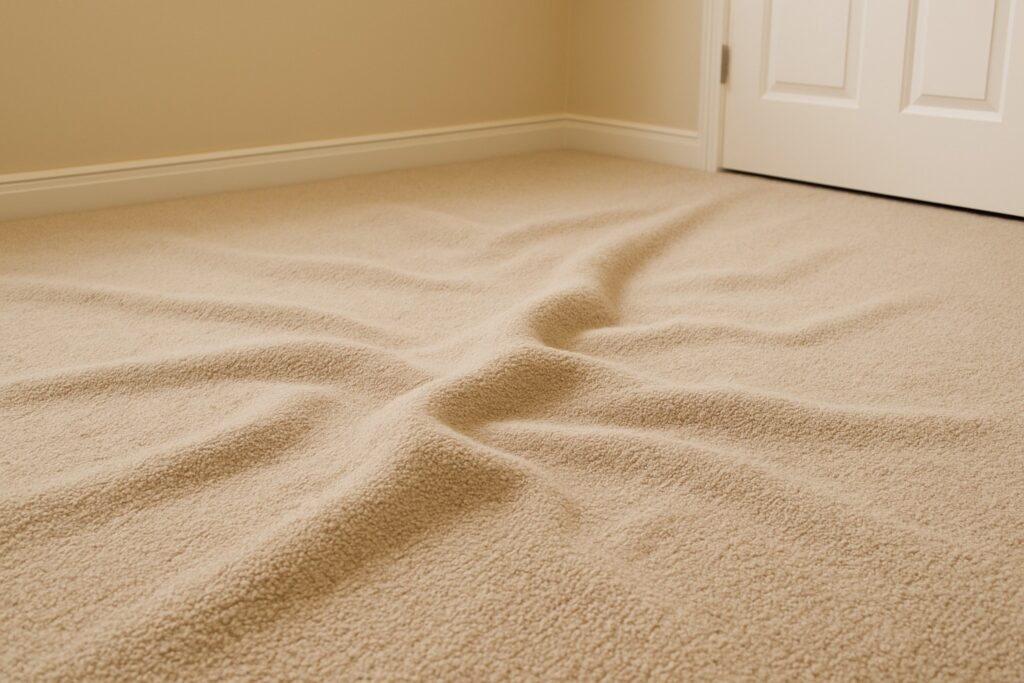
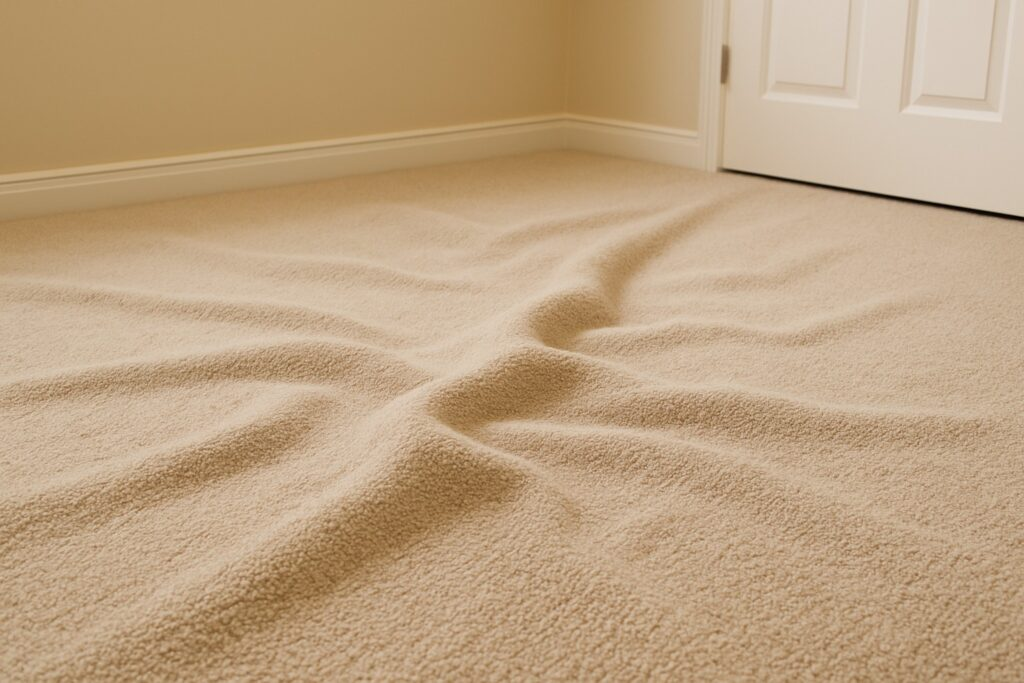
Carpet can sit quietly in a home for years before anything seems wrong. Then one day a small ripple appears across the hallway, or a loose section starts shifting slightly underfoot in the living room. It often shows up slowly rather than all at once, which is why many homeowners aren’t sure whether the carpet is actually wearing out or simply losing tension.
That’s usually when the question of carpet restretching vs replacement comes up. Is it something that can be repaired and tightened back into place, or is it a sign the flooring has reached the end of its useful life?
Across many New Zealand homes, the answer depends less on the ripple itself and more on the overall condition of the carpet underneath. Sometimes a simple restretch brings everything back into line. Other times the ripple is just the first sign that the carpet has already done its job for a number of years.
Why Carpets Start to Ripple or Loosen
Carpet doesn’t normally ripple without a reason. In many cases it’s a combination of small changes that build up over time rather than a single issue.
Heavy foot traffic through hallways and living areas gradually reduces the tension that was applied during installation. Furniture movement can also shift the carpet slightly, particularly when large pieces are dragged or repositioned. In older homes, the underlay beneath the carpet may compress unevenly, which can allow sections of the flooring to relax and lift.
Humidity changes can contribute as well. Carpet fibres and backing materials expand and contract slightly as indoor moisture levels change between seasons. Over several years, those small movements can leave the carpet a little looser than it originally was.
When that happens, carpet restretching is often the first option considered because the ripple itself doesn’t necessarily mean the carpet is worn out.
What Carpet Restretching Actually Fixes
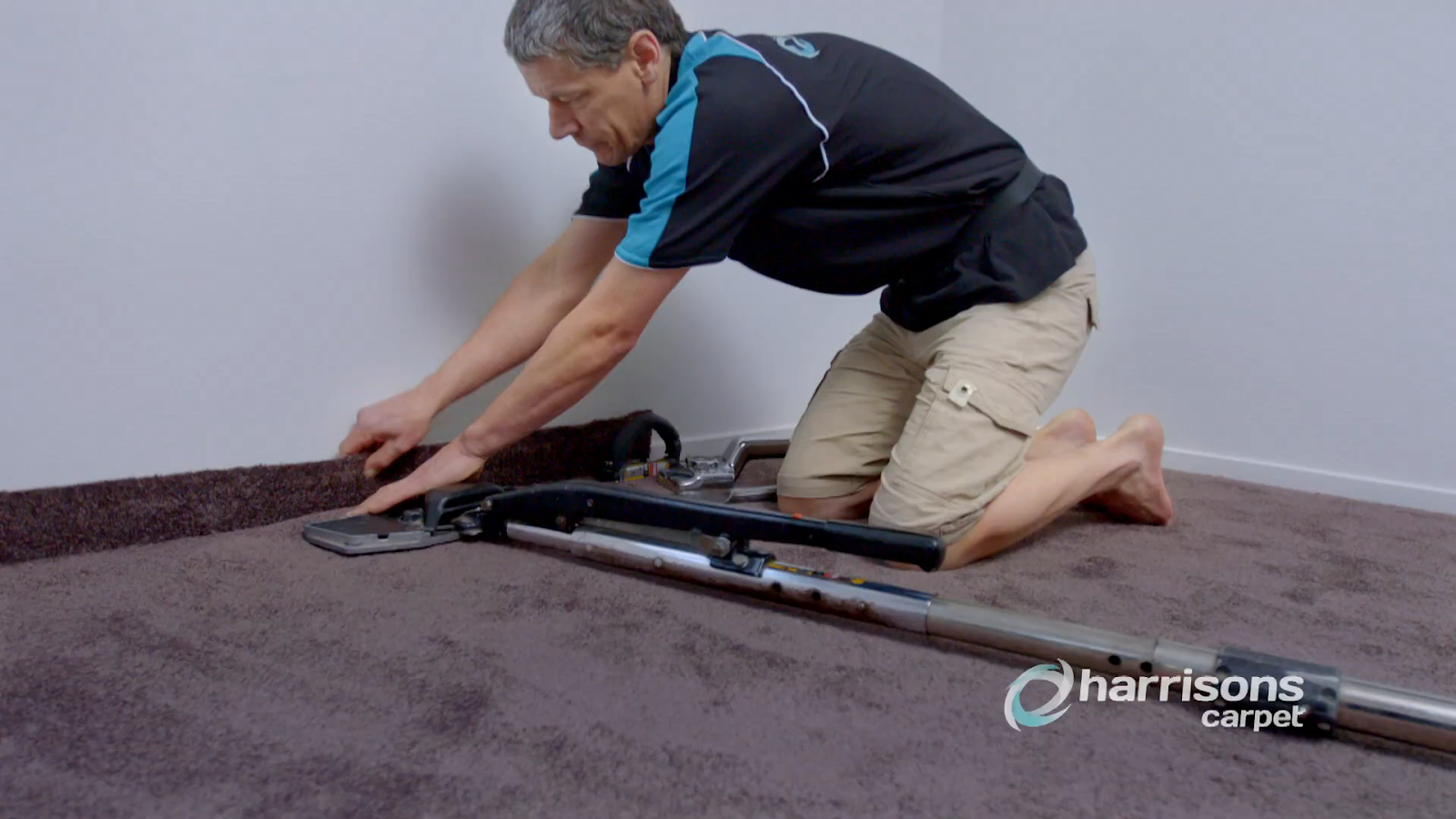
Restretching focuses on restoring the tension across the carpet surface rather than replacing the material. During the process, sections of carpet are lifted from the edges of the room, stretched back into position, and reattached to the gripper rods that hold the flooring in place.
When the carpet fibres are still in good condition and the backing hasn’t deteriorated, this can flatten ripples and remove the loose movement people sometimes feel underfoot.
Homes where the carpet is still relatively new often see good results from carpet restretching. If the fibres still spring back when walked on and there are no major stains or damage, tightening the carpet can extend its usable life for several more years.
It’s essentially correcting the tension rather than replacing the surface.
When Replacement Becomes the Better Option
There are situations where restretching doesn’t really solve the underlying problem. A ripple might be the most visible issue, but the carpet itself may already be showing signs of wear that stretching alone won’t improve.
Flattened walk paths, thinning fibres, or permanent staining often indicate that the carpet has already absorbed a decade or more of daily use. In these cases, tightening the carpet may remove the ripple but won’t restore the appearance or comfort of the floor.
Older underlay can also play a role. If the cushioning layer beneath the carpet has broken down, the carpet may continue to loosen again after being stretched.
When that happens, replacing the flooring usually becomes the more practical solution. Looking through different carpet flooring options often gives homeowners a clearer sense of how modern materials compare to what may have been installed many years earlier.
Comparing Cost and Lifespan
One of the main reasons homeowners consider carpet restretching vs replacement is cost. Restretching is typically a smaller repair job because it focuses on labour rather than new materials. When the carpet itself still has good life left in it, that repair can be a sensible way to extend its performance.
Replacement involves a larger investment because it includes new carpet, underlay, and installation. However, it also resets the lifespan of the flooring entirely. A new carpet can perform for well over a decade depending on the quality and how the room is used.
Sometimes the decision comes down to timing. If the carpet is already approaching the end of its natural life, replacement may prevent the need for multiple repairs later on. In other homes, a restretch may provide several more years of comfortable use before a full upgrade is needed.
What Installers Look At Before Recommending Either Option
Before deciding between repair and replacement, installers usually assess several factors that affect the carpet’s long-term performance.
The age of the carpet is often the first clue. Flooring that has been installed for more than ten or fifteen years may already be nearing the point where fibres begin to lose resilience. Installers also look closely at traffic areas to see how much wear has built up along common walk paths.
Underlay condition matters as well. If the cushioning beneath the carpet has compressed heavily, the surface above it may struggle to hold tension even after restretching.
Traffic patterns also play a role. Hallways, entrances, and family living areas tend to show wear earlier than bedrooms. In some homes, restretching a single room may be worthwhile, while in others it makes more sense to review broader flooring upgrades such as hard flooring options that handle heavy traffic differently.
Making the Right Choice for Your Home
The decision between carpet restretching vs replacement usually becomes clearer once the overall condition of the carpet is understood. A ripple on its own doesn’t necessarily mean the floor has reached the end of its life. If the carpet fibres are still healthy, a restretch can often restore the surface and keep the room looking tidy.
When the carpet has already absorbed many years of daily use, however, replacement may offer a more lasting solution. A fresh installation resets both the comfort and durability of the floor rather than simply tightening what’s already there.
In many cases the answer only becomes obvious once the carpet is inspected in person. A quick look at tension, fibre wear, and underlay condition can reveal whether repair will solve the issue or whether the room is ready for a new surface.
That practical approach is generally how Harrisons Carpet & Flooring helps homeowners decide between repair and replacement. A free in-home flooring consultation allows the carpet to be assessed properly so the recommendation reflects how the floor has actually been used over time.