New Zealand has always been a land of dramatic weather — but in recent years, the frequency and severity of flooding events has reached a level that few of us were prepared for. From Northland to Central Otago, thousands of Kiwi families have found themselves in the same heartbreaking situation.
If you're one of them, you're not alone. Acting quickly and logically can make a huge difference to what can be saved — and what your insurer will cover.
1. Safety first
Before you set foot back inside your home, confirm it's safe to do so. Check with your local Civil Defence or council that your property has been cleared for re-entry. Flooding can compromise structural integrity, and there may be live electrical hazards or contaminated water present. Never enter a flooded property if power is still connected.
2. Document everything - immediately
After personal safety, this is the most important step you can take, and it needs to happen before you move, lift, or remove anything.
Take photos and videos of every affected room. Close-ups of the waterline on walls and skirting boards, flooring in its damaged state (warping, lifting, discolouration), subfloor areas if visible, damaged furniture or belongings, and any structural damage.
These images are your evidence for your insurance claim. The more thorough you are, the smoother the process will be.
Write down dates and times of each action taken and include costs incurred such as(professional drying, materials, temporary accommodation, tradespeople and inspectors. This timeline supports your insurance claim.
3. Lift your flooring as soon as you can
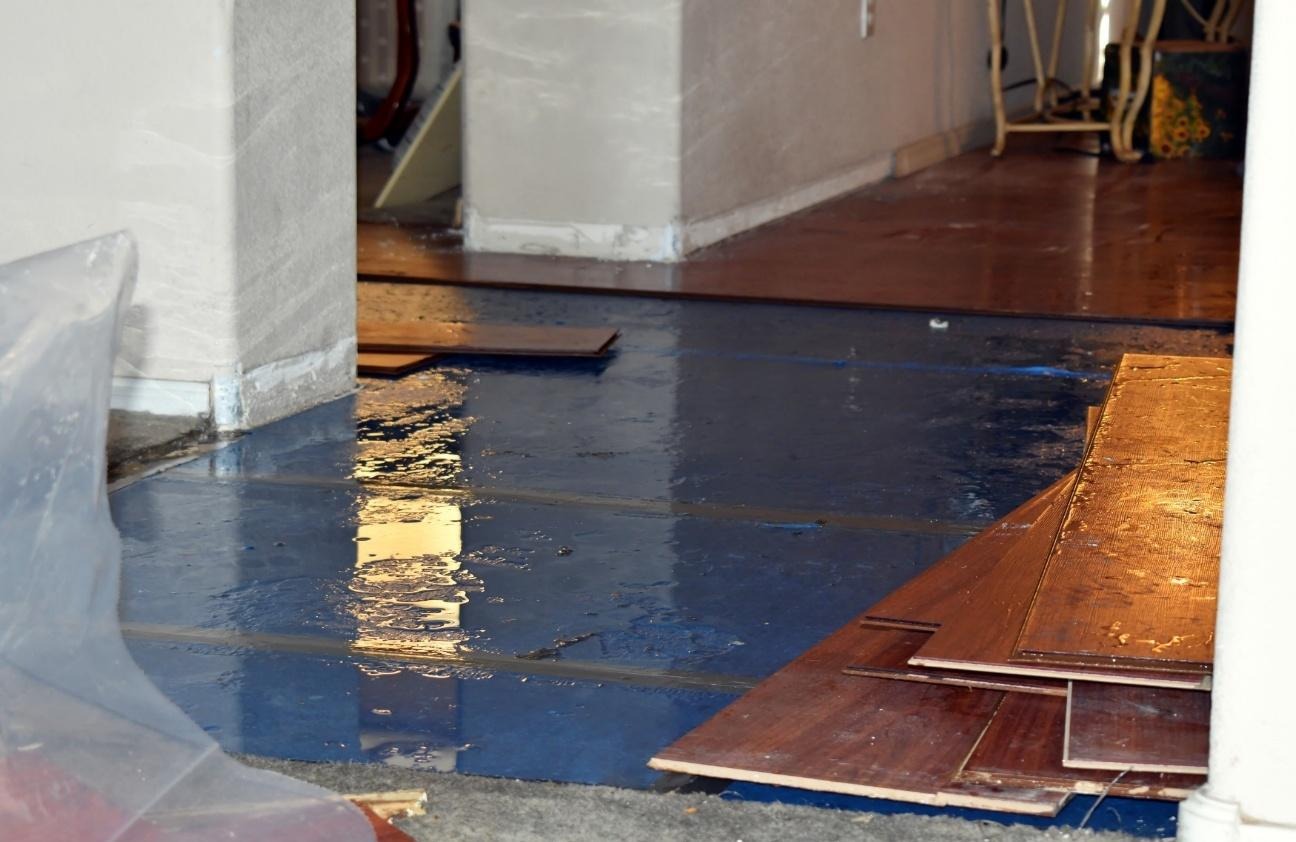
Whether you have timber, engineered wood, laminate, or tiles on a timber subfloor, moisture trapped underneath will cause serious secondary damage — and it happens fast.
The longer moisture sits trapped beneath flooring, the greater the risk of mould, timber rot, and damage spreading to the subfloor and joists.
4. Dry the space aggressively
Once flooring is lifted, your priority is airflow and dehumidification. Open all windows and doors (weather permitting), use fans to circulate air. Hire a commercial dehumidifier if you need to.
5. Don't throw anything away yet
It's tempting to rip out ruined flooring and start fresh — but hold off until your insurer has assessed the damage. Disposing of materials prematurely can complicate your claim. If it’s a safety hazard and needs to be removed, photograph it and document why it needed to be removed.
6. Prevent mould from taking hold
Mould can begin growing within 48 hours in wet conditions. Most of the time it can be cleaned with a disinfectant solution, but if visible mould isspreading, contact a professional. This is because disturbing it without proper precautions can spread spores throughout the home.
7. Call in the professionals
A professional can tell you what can be dried and saved versus what needs replacing, and their report will carry real weight with your insurer. Attempting to assess structural timber damage yourself — particularly to subfloors and joists — risks underestimating hidden damage that causes problems months down the track.
Harrisons supporting you through your insurance claim
Harrisons flooring experts live and work in communities right across New Zealand. When a flood event hits your town, it often hits ours too. Our people aren't dispatched from a distant head office; they're part of the same community, and they understand first-hand the stress and emotional toll that flood damage brings.
Navigating an insurance claim on top of the practical clean-up is exhausting. Insurers will want detailed evidence, professional assessments, and itemised quotes — all while you're stressed, displaced, and trying to hold it together.
Harrisons works directly with homeowners following flood events and we know what insurers look for when assessing claims.
We’ll help with your claim documentation, communicate directly with your insurer or loss adjuster on your behalf, and provide repair and replacement quotes.
Flooding has become a reality for New Zealand homeowners, and having the right team in your corner can make a big difference. The earlier we're involved, the better placed we are to ensure your claim reflects the true extent of the damage.
We’re here, we're local, and we're ready to help.